
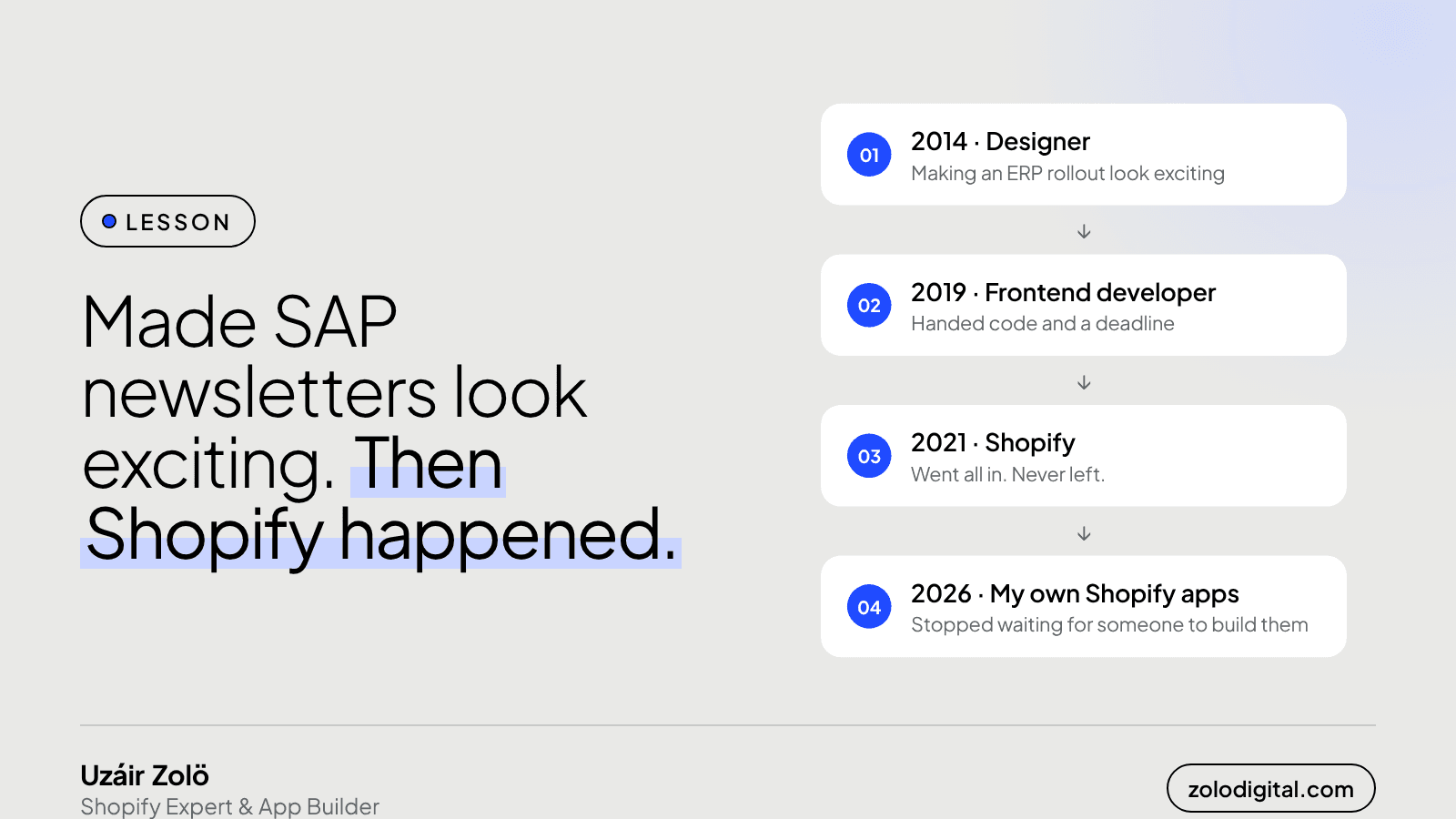
You go from graphic designer to Shopify developer by keeping the design skills and adding code on real projects. That's what I did: five years of design work from 2014, a move into front-end development in 2019, Shopify full time from 2021, and my own Shopify apps by 2026. The design years turned out to be the advantage, not the detour.
This isn't a "learn to code in 30 days" story. It took years, a lot of "can you make the logo bigger", and most of it happened on the job.
What did the path actually look like?
- 2014: Designer and SAP data operator, Engro. Daily newsletters for the company's ERP rollout. My first job was design, not code.
- 2016: Creative Officer, Uniferoz (Saniplast), plus a product design stint at SECMC. Product branding and design briefs.
- 2017: Senior Graphic Designer, Edukaan.buzz. Design for educational publications and their marketing, in print and online.
- 2019: Frontend Developer, Imtiaz Super Market. This is where I moved into code: corporate websites, an ecommerce platform for Imtiaz's fashion brand, and its first online delivery system for Ramadan packages.
- 2021: Shopify, full time. Senior developer at SIAR Digital and Phase 3 Commerce, building themes, customisations and bespoke features for agency clients.
- 2022–2024: VERSUS, Softnox, Balqees, Zero Lifestyle. Senior developer roles, and managing the Balqees stores across three countries.
- 2026: Technical Manager at Bays International. Collection Toolkit is live on the Shopify App Store, and I'm building PriceToolKit.
The full timeline is on my about page.
Were the design years wasted?
No. They're the reason my builds look the way they were designed.
On a lot of projects, a designer hands a mockup to a developer, and something gets lost between the two: spacing, type, the way a hover state should feel. When the same person does both, there's no handoff. The design goes straight into the theme.
Years of print and brand work also trained my eye for the details merchants notice even when they can't name them: alignment, hierarchy, consistency across pages. That's most of what makes a store feel premium.
How did you actually learn to code?
On a real job, shipping real sites. I started front-end work at Imtiaz in 2019, and the freeCodeCamp Responsive Web Design certification came in 2021, two years later.
I'm not against courses. But a course gives you exercises, and a job gives you deadlines, real users and a site that has to work on Monday. The second one taught me more, faster.
If you're a designer who wants to code, my advice is to find work where you have to ship something, even small. Build the landing page you designed. Fix the theme section that never matched your mockup.
Why only Shopify?
Since 2021 I've worked almost entirely on Shopify, and going deep beat going wide.
Knowing one platform well means you know where its limits are, which apps cause problems, how Liquid behaves at scale, and what the admin can and can't do for a merchant's team. That knowledge compounds. Spreading across five platforms would have meant knowing a little about each and a lot about none.
Where did building apps come in?
Last. My own apps came after years of client stores, not before.
By the time I started building them, I'd spent years inside the Shopify admin, themes and APIs on other people's stores. You build better tools once you've used the platform every day. Collection Toolkit is live, and I'm writing up PriceToolKit as I build it.
What actually mattered?
- A designer who codes doesn't need a handoff. He just argues with himself.
- Real projects beat courses. My certificate came two years after the coding job. Don't tell HR.
- One platform properly beats five platforms vaguely.
- Tools come after experience. After enough client stores, you stop waiting for someone else to build the tool.
Nothing is wasted. The newsletter guy still checks every pixel I ship.
If you want a store built by someone who designs and develops it, get in touch.